

9 Common Orthodontic Problems & How We Fix Them
Most orthodontic problems fall into a handful of familiar categories - crowding, spacing, and bite issues like overbite, underbite, and crossbite. Nearly all of them are treatable at any age with braces or clear aligners. Here’s what each one means, why it’s worth addressing, and how board-certified orthodontist Dr. Lew Sample treats it at Valley Orthodontics in Decatur and Hartselle.
When teeth or jaws don’t line up the way they should, orthodontists call it malocclusion - literally, a “bad bite.” It’s incredibly common, and it happens for reasons mostly outside anyone’s control: genetics, jaw size, early loss of baby teeth, or habits like prolonged thumb-sucking. Left alone, many bite problems make teeth harder to clean and can lead to uneven wear, jaw strain, or self-consciousness. The good news is that today’s orthodontics can correct all of the issues below - and a free consultation is the easiest way to find out which one you’re dealing with.
1. Crowding
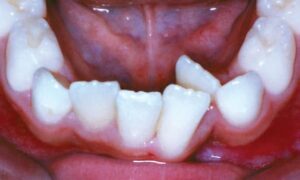 Crowding happens when there isn’t enough room in the jaw for all the teeth, so they overlap, twist, or push out of line. It’s one of the most common reasons people seek orthodontic care. Beyond appearance, crowded teeth trap food and are harder to brush and floss, raising the risk of cavities and gum problems. We treat crowding with braces or Invisalign, sometimes creating space by expanding the arch - often best guided with early treatment in growing children.
2. Spacing & Gaps
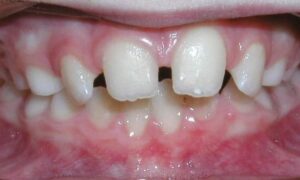 The opposite of crowding, spacing leaves visible gaps between teeth (a gap between the front teeth is called a diastema). Gaps can come from missing teeth, a mismatch between tooth and jaw size, or habits. While some gaps are purely cosmetic, others let food pack in and can affect the bite. Braces and clear aligners close spaces predictably for a more even, healthy smile.
3. Overbite (Deep Bite)
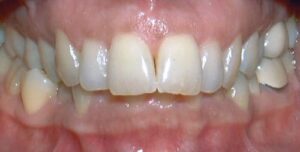 An overbite is when the upper front teeth overlap too far over the lower ones. A deep overbite can cause the lower teeth to wear down, irritate the gums behind the upper teeth, and contribute to jaw discomfort. Orthodontic treatment repositions the teeth - and, in growing children, helps guide jaw development - to create a healthier, more balanced bite.
4. Underbite
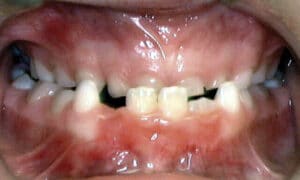 An underbite is when the lower teeth sit in front of the upper teeth. It’s often related to jaw growth, which is why catching it early matters - early treatment can guide the jaws while a child is still growing. In teens and adults, underbites are corrected with orthodontics and, in more severe skeletal cases, sometimes with surgical coordination. See our complex cases page for more involved bites.

6. Open Bite
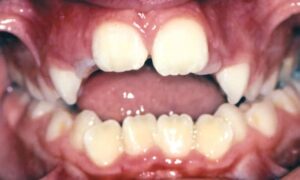 An open bite is when the upper and lower front teeth don’t touch even when the back teeth are closed, often leaving a visible gap. It’s frequently linked to prolonged thumb-sucking or tongue habits. Open bites can make biting and chewing difficult and affect speech, and they respond well to orthodontic treatment - earlier is easier.
7. Protrusion (Overjet / “Buck Teeth”)
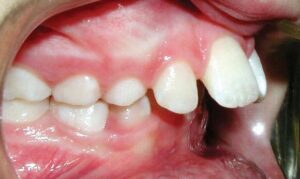 Protrusion, or increased overjet, is when the upper front teeth stick out horizontally beyond the lower teeth. Beyond appearance, protruding front teeth are much more prone to injury, especially in active kids. Braces and aligners bring the teeth into a safer, more balanced position; guiding it early in children can reduce the risk of a chipped or knocked-out tooth.
8. Impacted Teeth
An impacted tooth is one that’s blocked from coming in properly, often stuck below the gumline - most commonly the upper canines. Impacted teeth can crowd or damage neighbors and need careful handling. Using 3D imaging, Dr. Sample can locate an impacted tooth precisely and, working with your dentist when needed, guide it into place.
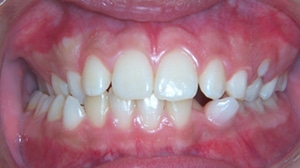
9. Dental Midline Misalignment
See the Results for Yourself
Photos tell the story better than words - visit our before-and-after smile gallery to see how real patients’ bites were transformed at Valley Orthodontics.